Mr. Sub
Mr. Sub is losing revenue and hurting customer retention because its desktop site makes it complicated for users to complete basic tasks.
As the UX Researcher, I conducted a formal heuristic review and led usability testing to pinpoint exactly why customers struggle to order food, customize items, and find the rewards system. By observing real users fail these basic flows, I recommended a clear roadmap for interface improvements.
Mr. Sub Makes It Feel Like They’re Gatekeeping Sandwiches
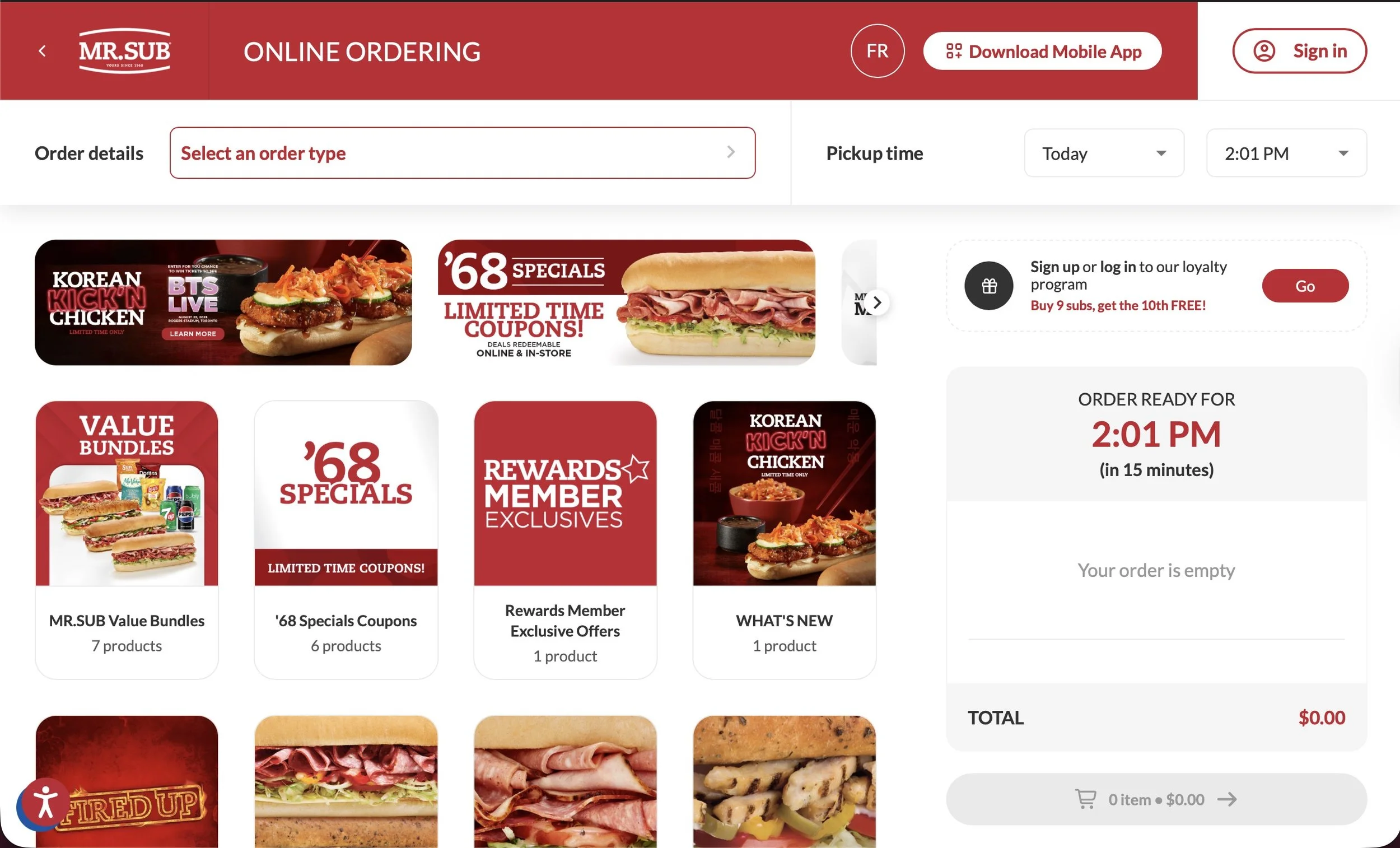
Mr. Sub has been a Canadian staple since 1968, built on the value proposition of fresh, custom subs made your way. However, the digital experience currently acts as a gatekeeper rather than a facilitator. For example, the business logic requires users to commit to a location and delivery time before they can even see the price of a sandwich. Although this may be a backend system constraint, this creates a high barrier for casual browsers who just want to see what is for dinner before providing personal data.
Bridging The Gap Between Function & Friction
The Mr. Sub’s website is a bit of a contradiction. While participants in our study successfully navigated the core tasks, the journey was far from delightful. Most users managed to reach the finish line, but they did so while navigating a maze of confusing pop-ups, rigid customization tools, and broken navigation loops. It is functional enough to work, but frustrating enough to make someone consider closing the tab and ordering from Uber Eats instead.
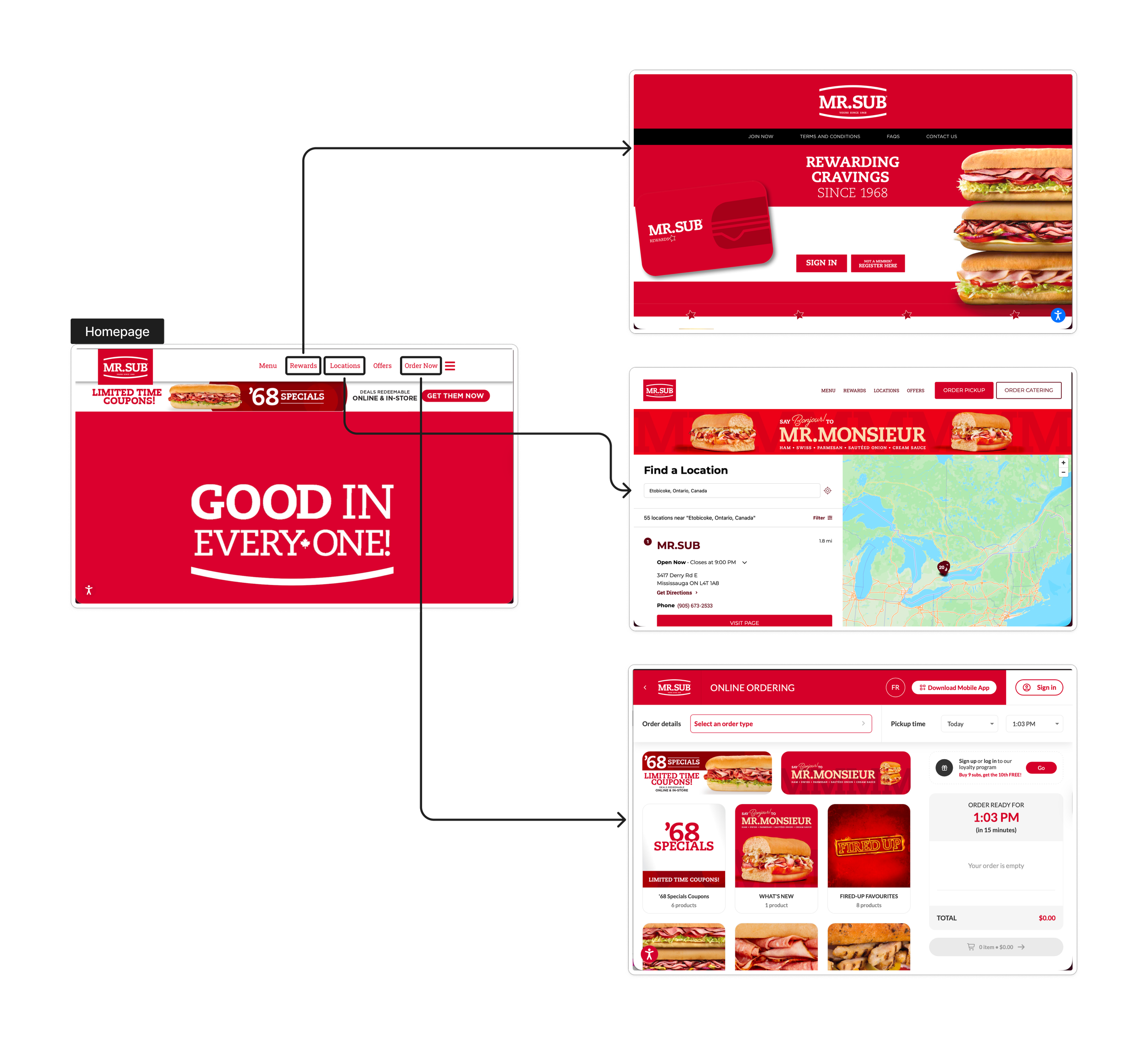
Upon first glance, the lack of visual continuity across the ordering funnel erodes user confidence.
How The Data Exposed Negative Themes
This project evaluated the Mr. Sub website to identify why users were feeling frustrated despite successfully finishing their orders. Along with my team members, we led a moderated remote usability study with eight participants to observe how they handled everything from group catering to loyalty program enrollment. We found a significant gap between the functional success of the site and the emotional satisfaction of the people using it.
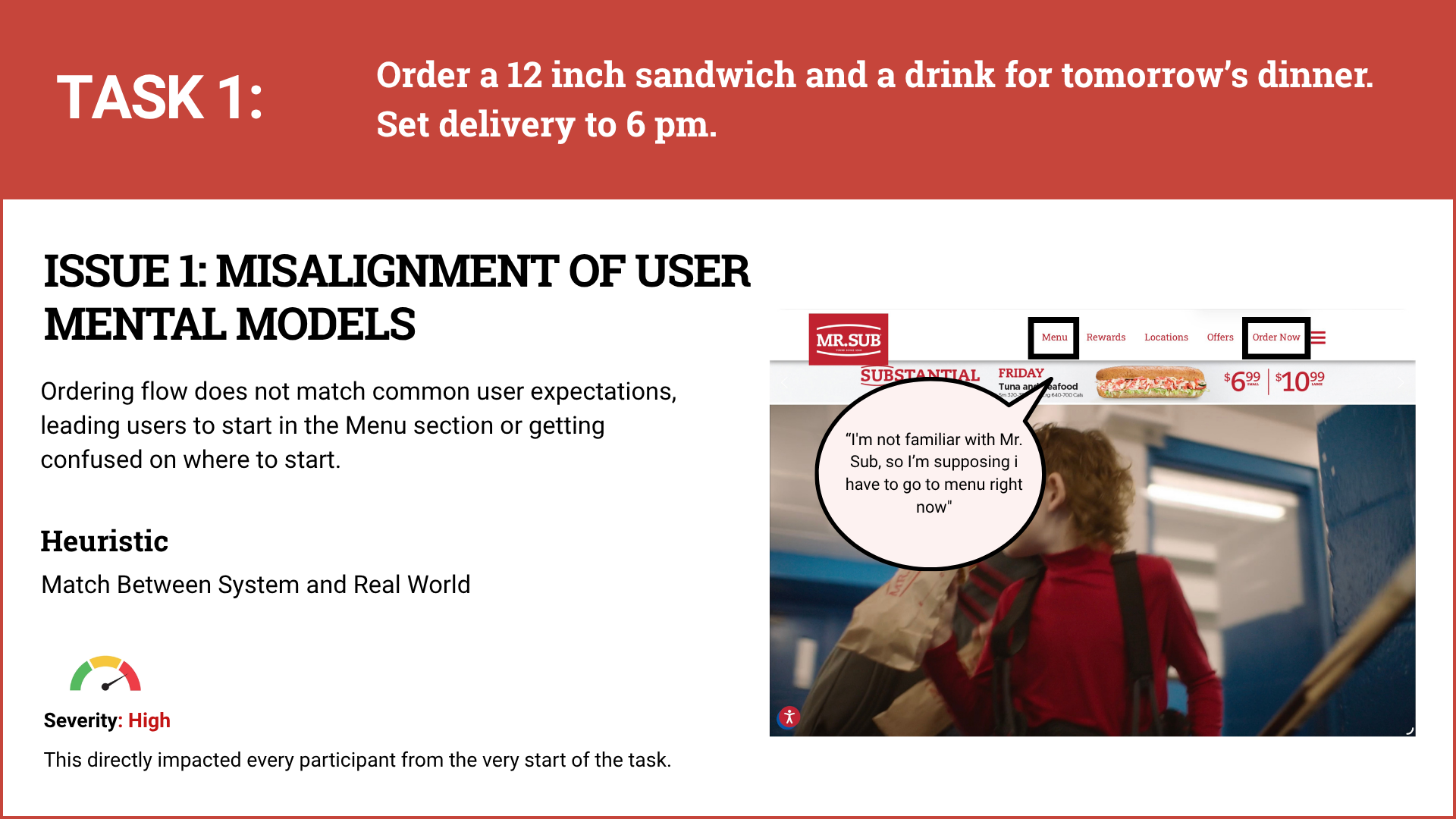
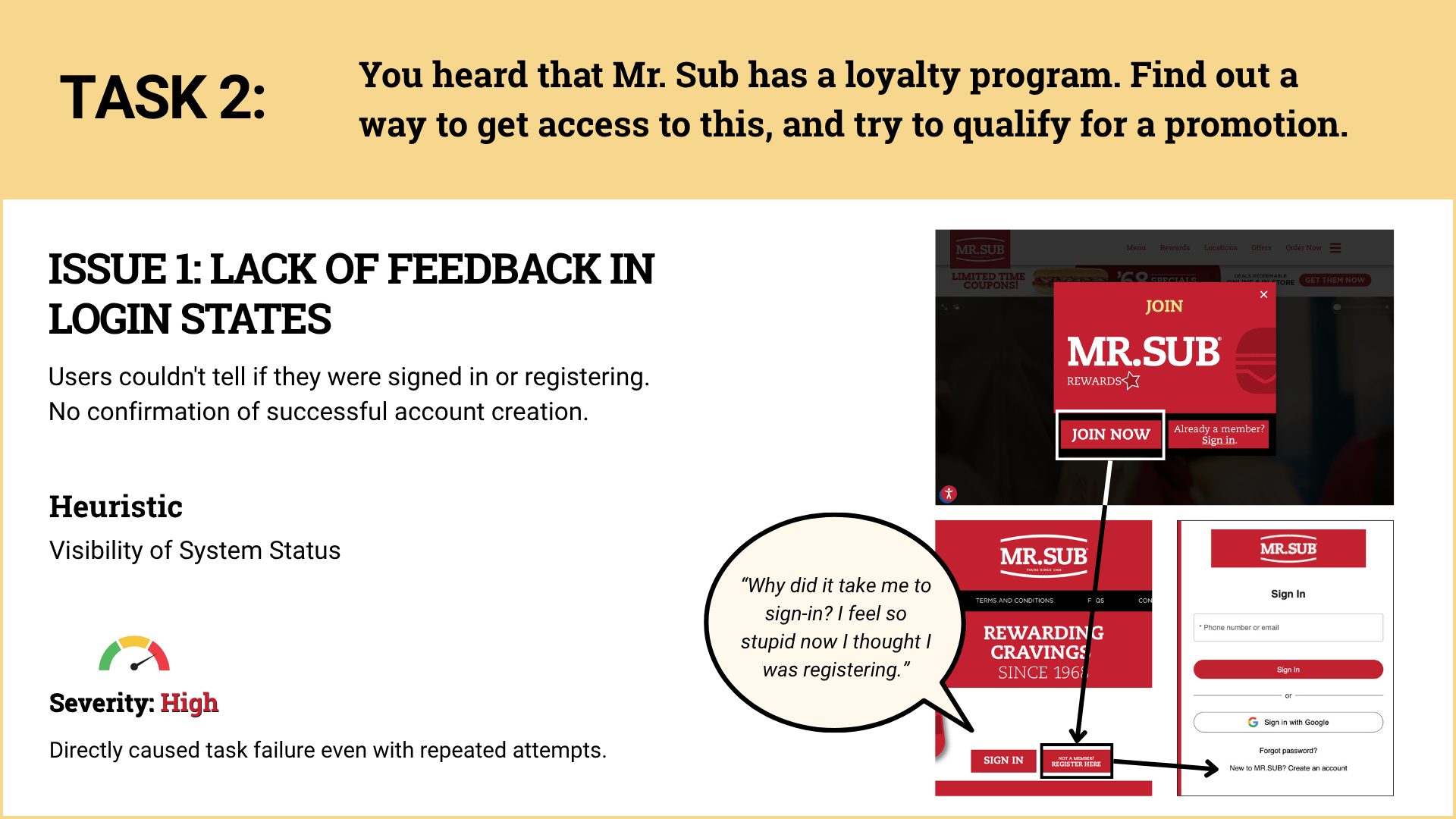
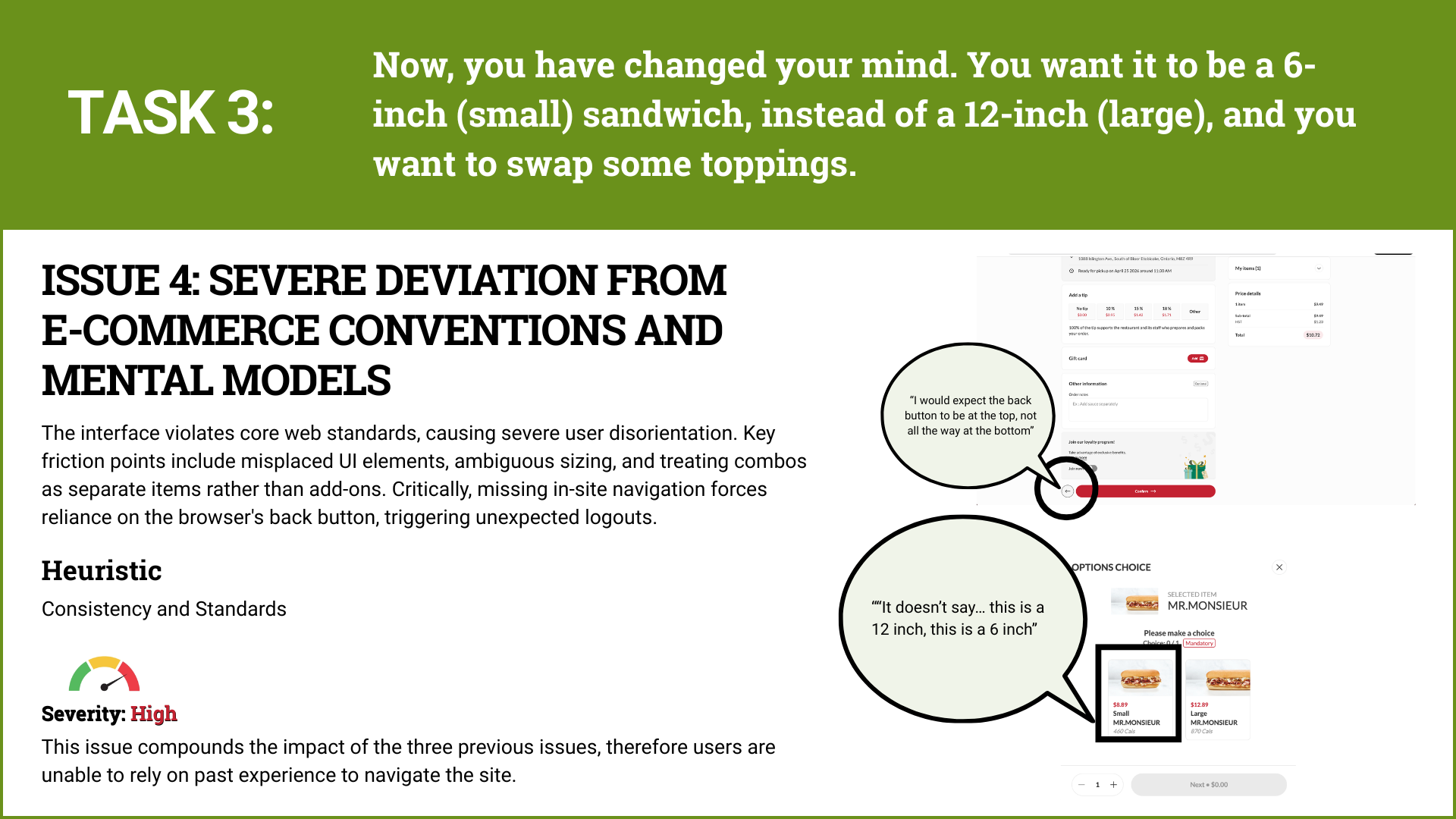
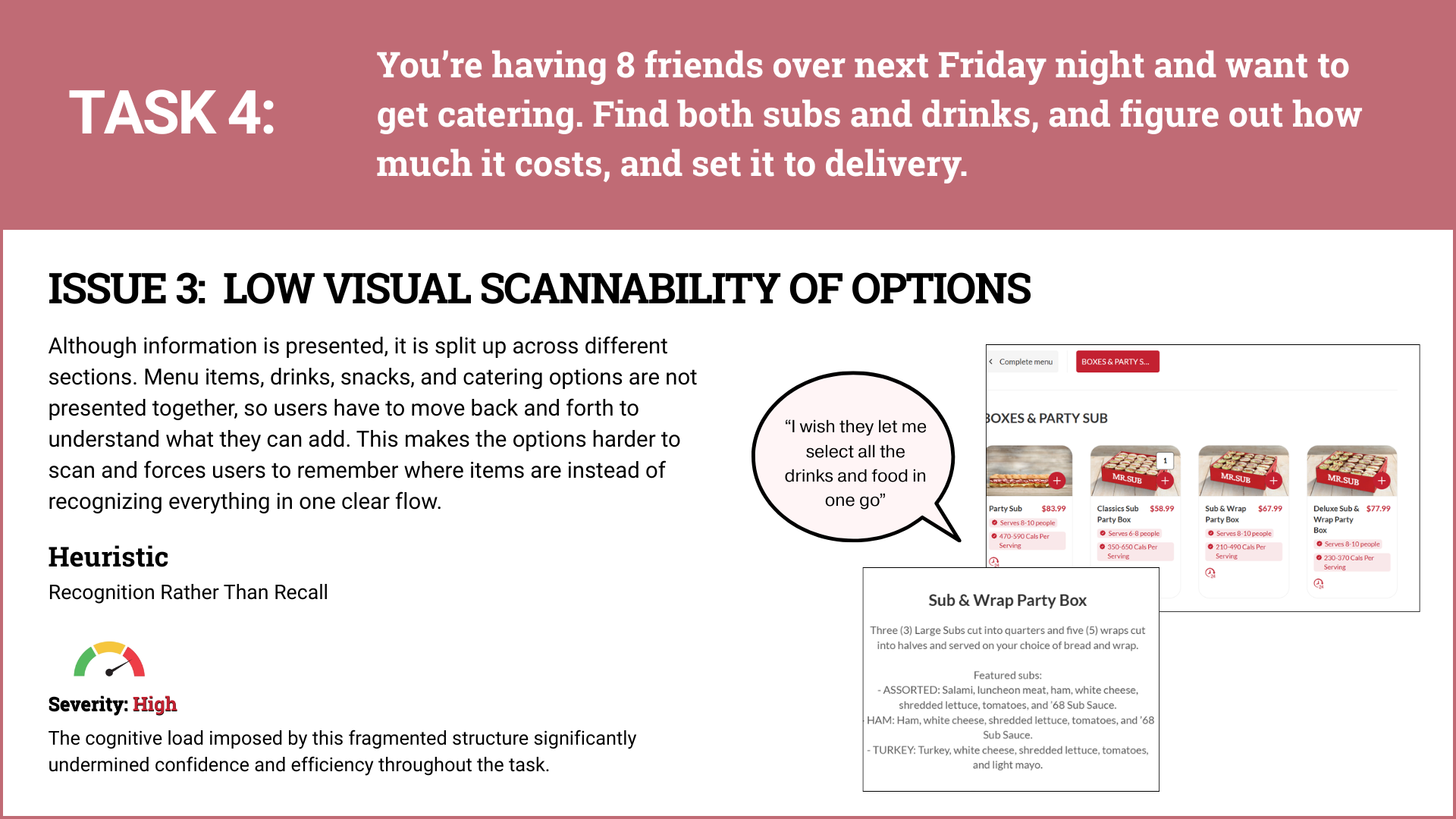
From there, we put the site through a rigorous Heuristic Evaluation against established industry standards. We looked at the competition and noticed that most modern food apps lean on a "Menu First" approach, letting people browse before committing to anything. Our review focused on identifying where the "Seamless Flow" broke down, such as when the site redirects users to external pages for checkout and strips away their ability to navigate back to the cart. Is that really a checkout flow, or just a detour? We used Affinity Mapping to cluster these "broken moments" into high severity issues like redundant data entry (e.g. re-typing an address that was already saved) and unhelpful error messages.
How Mr. Sub Can Improve
Overall, the Mr. Sub site allowed users to complete the main tasks, but the experience was not always smooth. Users were able to order catering, order individual food, change an order in the cart, and find the rewards system, but each flow created some friction. Improving navigation, cart editing, saved delivery information, and product images would make the site easier to maneuver and give users more confidence when placing an order.
Mr Sub. needs to optimize their website’s user experience so that new and regular customers will purchase from the site, and are motivated to remain loyal to the brand as their preferred sandwich shop.
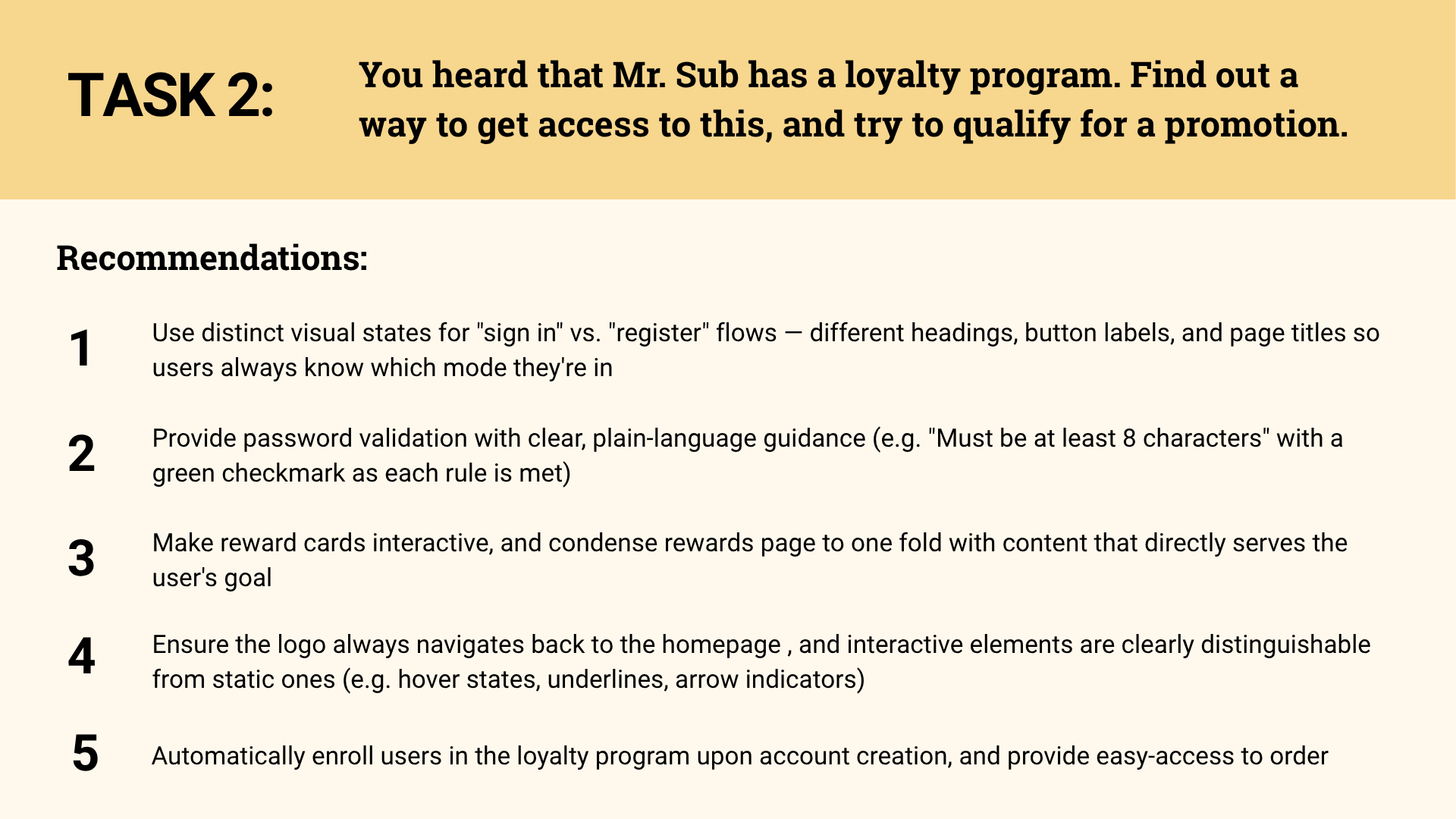
Based on data collected from heuristic analysis and usability testing, I recommended the following improvements for the loyalty program interface: