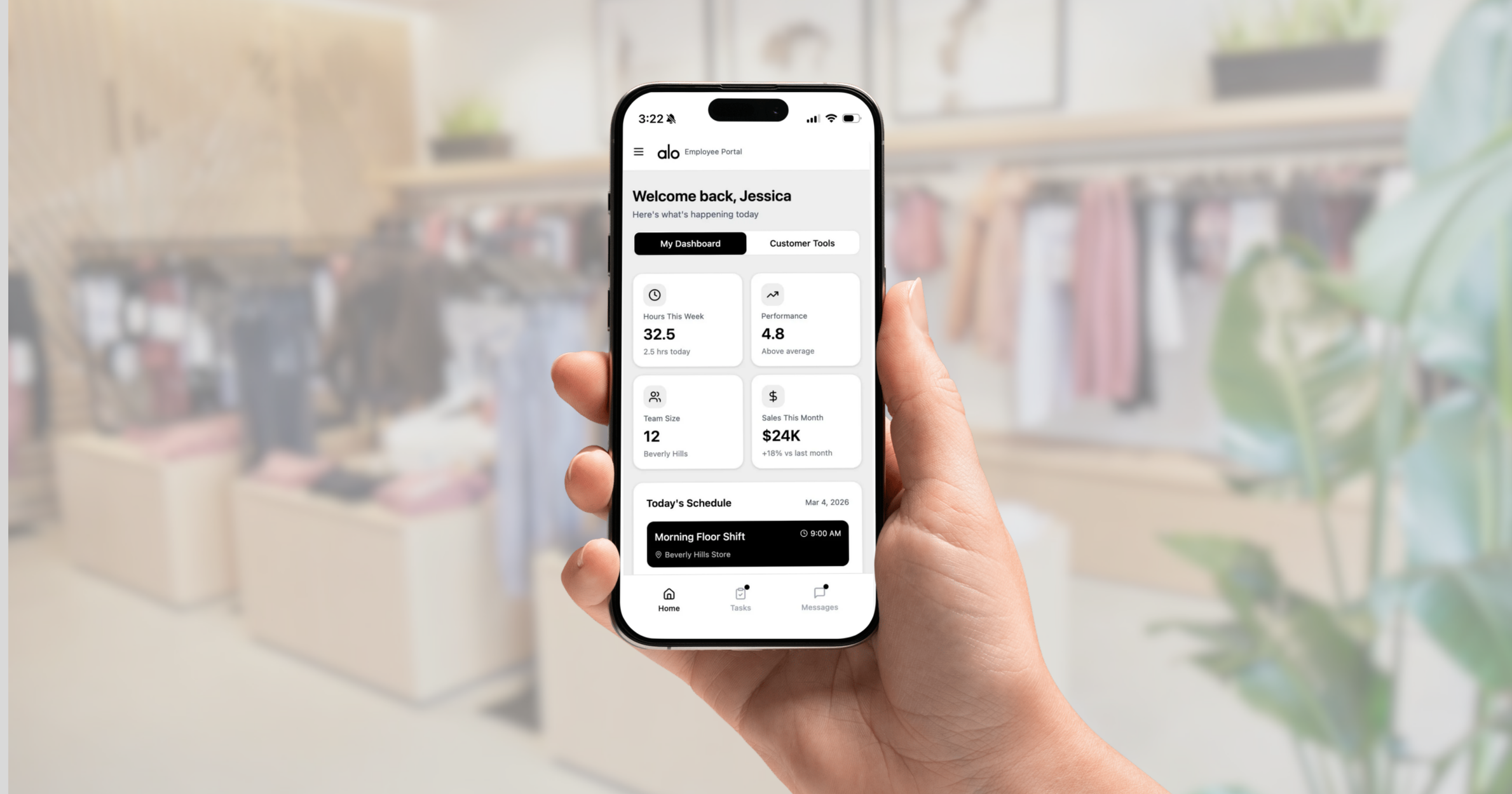
Alo
How Can We Make Employees Lives Easier?
Overview
-
While customers enjoy a serene "sanctuary" shopping experience at Alo, associates are trapped in a high-velocity operational grind
Retail employees face constant context-switching between assisting customers and managing inventory using fragmented, industry-standard software like gStore
-
I audited Alo’s brand values and built an Employee Journey Map focusing on "Linda," a Sales Associate, to identify the activites and emotions that impact each touchpoint
I identified pain points in Alo Yoga’s retail workflows and built a streamlined internal dashboard to replace bloated industry-standard software like gStore
-
Bridging the Gap Between Brand and Tool: This project taught me that a brand is only as strong as its internal tools. I was surprised to see how a world-class wellness brand like Alo could have such a disconnect between its "Zen" stores and its "Click-heavy" digital back-end.
The Reality of Industry Constraints: As a designer just starting out, I initially viewed software as a canvas for creativity. However, through this project, I discovered that the retail world often relies on "industry-standard" legacy systems like gStore. I learned that my role is to understand why these complex systems exist and how they should be constantly iterated for improvement.
-
Field Validation & Journey Gap Analysis: I would step into a physical Alo "Sanctuary" to shadow Sales Associates during high-traffic shifts. This will allow me to validate the preliminary research findings used to build my journey map against the lived reality of a Saturday afternoon rush. By observing these behaviors firsthand, I can cross-reference my initial data with real-time operational friction.
Validating the "gStore" Alternative: I designed this specifically to address the "many clicks" in gStore. I can run a comparative usability test, pitting my prototype against the current software, to see if my focus on minimalism actually translates to faster and easier task completion for the staff.
Deepening My Technical Knowledge: While I used Figma to build this concept, I would collaborate with a developer to understand the technical constraints of retail APIs. I need to learn if pulling real-time inventory and personal sales data into a single view is as "seamless" as I imagined it, or if there are backend hurdles I have yet to consider.
About Alo’s “Zen” Vibe
Founded in 2007, Alo is a premium yoga apparel brand and currently a leader in the athleisure market, competing directly with giants like Lululemon and Athleta.
Alo does not just open retail stores; they open "sanctuaries." These high-traffic physical locations are designed as immersive wellness hubs, often featuring organic juice bars, yoga studios, and community spaces. Alo’s audience is highly digital, the pressure on front-line associates is immense. These employees must manage a complex omnichannel environment, balancing physical store maintenance with a high volume of digital orders and influencer-led traffic, all while maintaining the brand's signature "mindful" persona.

Operational Chaos Amongst Luxury Wellness
Alo stores are designed to be zen-like environments, yet the employee experience often tells a different story. For a brand built on wellness, the gap between the customer’s peaceful shopping experience and the associate’s high-velocity operational friction is a significant threat to brand integrity. Retail employees face constant context-switching between assisting customers and managing inventory, leading to delays, missed restocks, and reduced service quality. Team collaboration gets challenging when all that employees can rely on is a headset, meaning employees have to recall requests rather than have a system to organize them.
As a market leader, Alo relies on industry-standard retail software (like gStore) to manage this growth. However, as my research identified, these "one-size-fits-all" tools often create a digital bottleneck. The friction between the associate's high-stress reality and the brand’s serene image is a critical gap that impacts employee retention and the quality of customer service. My project aims to close this gap by designing a digital tool that actually aligns with the brand’s "mindful" mission.
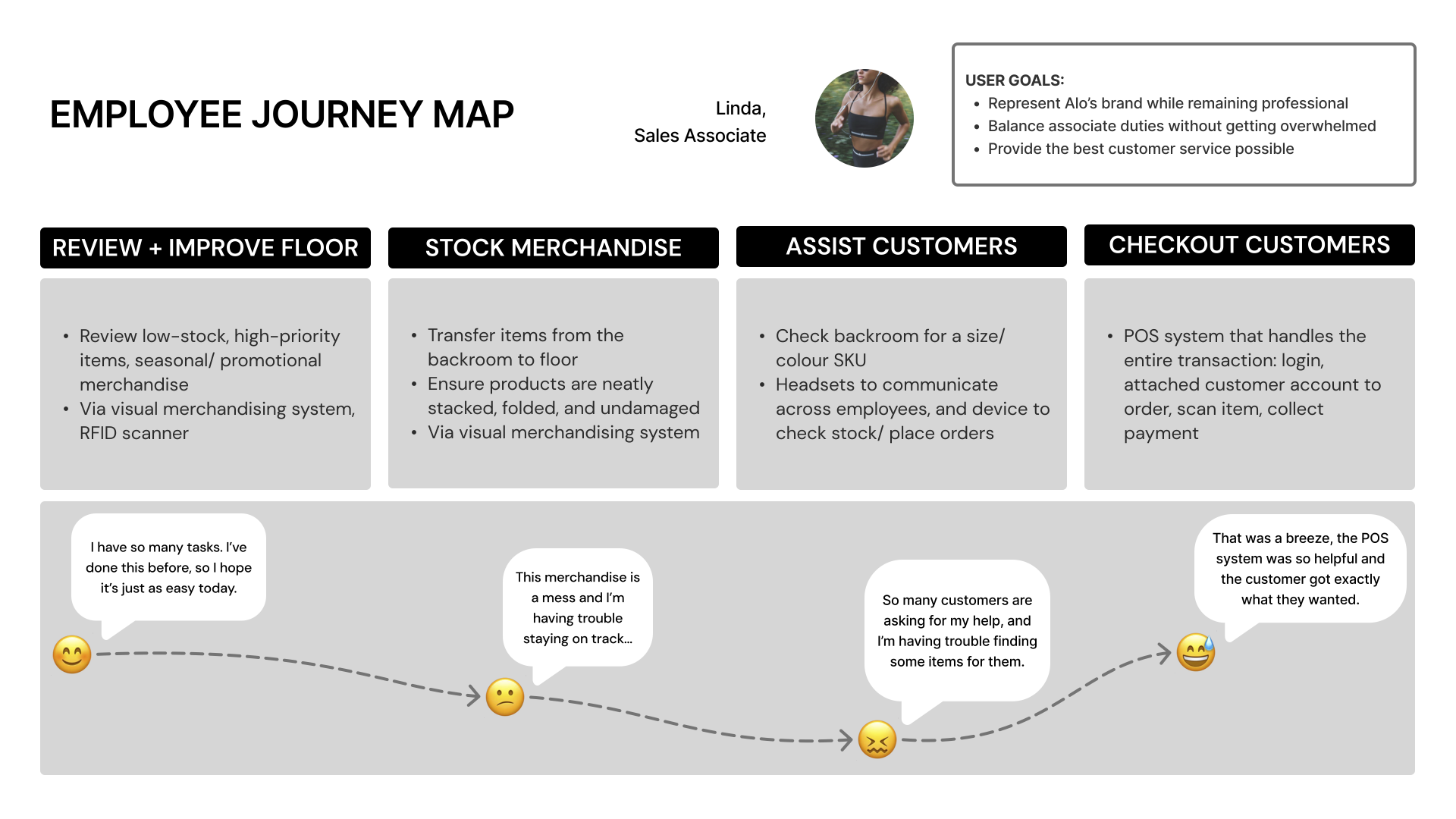
The Gaps I Noticed in An Associate’s Workflow
I audited Alo’s brand values and built an Employee Journey Map focusing on "Linda," a Sales Associate. My mapping revealed two critical failures:
The "Mental Model" Trap: Linda starts the day feeling organized, but the invisible friction of high-friction tasks (Review Floor, Stock Merchandise) quickly creates a state of soverwhelm and a fear of staying on track.
The "Customer Service" Bottle Neck: As the day progresses, Linda encounters the pain of redundant systems. Headsets are noisy, many clicks in gStore are required, and she can't find stock efficiently. The map explicitly shows her journey dipping from "calm" to "stressed" during the peak hours of assisting customers.
How I Designed For the Associate’s Peace of Mind
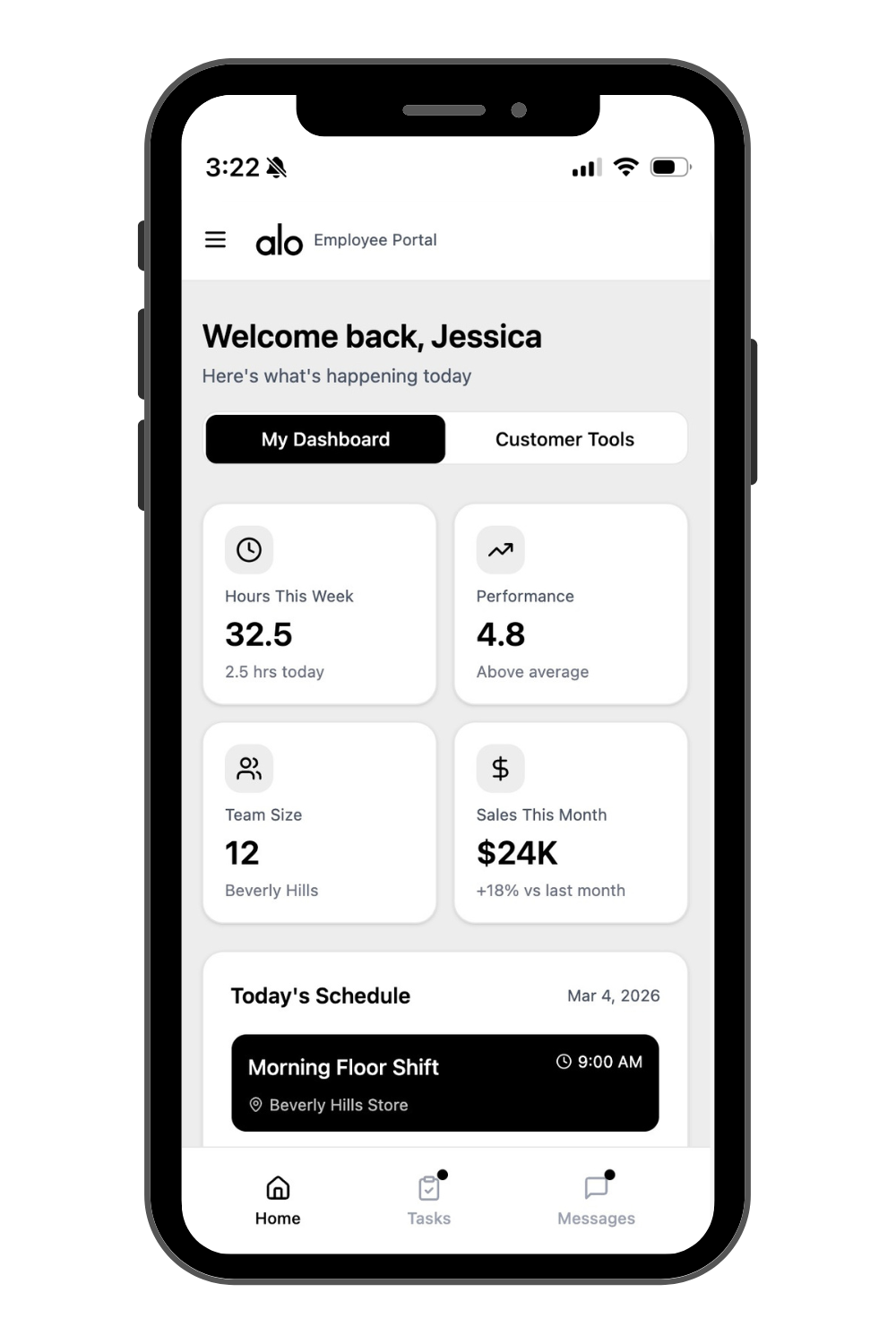
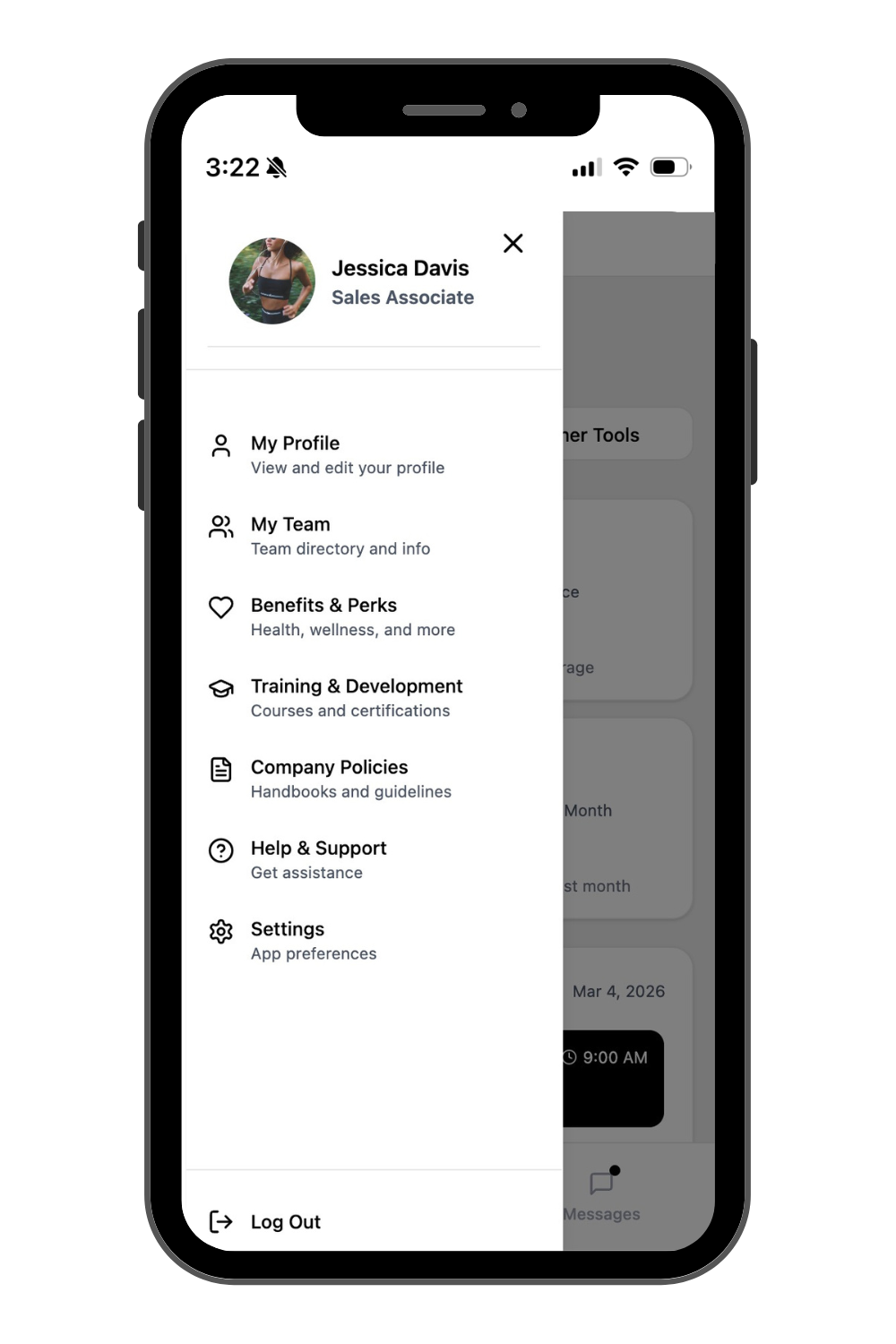
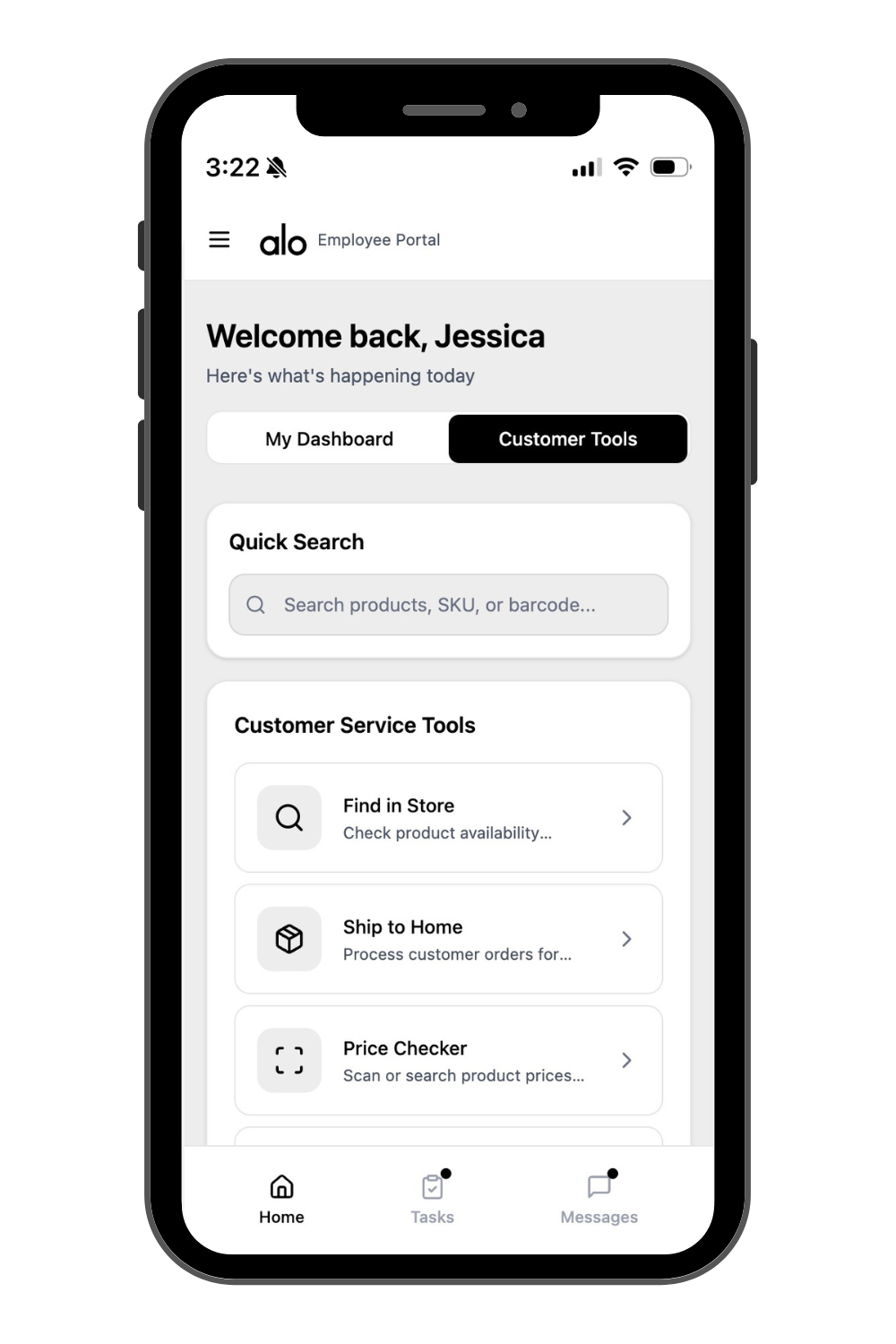
To tackle these specific pain points, I built a high-fidelity Figma prototype of an all-in-one Employee Portal designed to move associates like Linda from "stressed" back to "calm." The current industry-standard software is gStore. However, this interface involves many clicks, as well as some features aren’t all contained within the platform and involve external functions to complete the task. I focused on creating a minimal dashboard that prioritizes what the employee actually needs to do.
Feature 1: Task Checklist to Reduce Overwhelm: Replacing the vague sense of "so many tasks" with a clear, dynamic Task List that allows Linda to maintain her focus. This is easily accessible from the navigation bar, allowing Linda to refer back to it as needed.
Feature 2: The Unified Search/Customer Tools Section: The portal prioritizes "Quick Search" (by product, SKU, or barcode) and groups high-intent customer actions like "Find in Store" and "Price Checker" into one seamless Customer Service Tools cluster. No external app switching is required, which directly fixes gStore’s problem.
Feature 3: The Dashboard vs. Tools Paradigm: I introduced visual grouping to support the associate’s "context." The high-friction "performance" and "schedule" data is prioritized on the main My Dashboard view. When it’s time to work with a customer, the associate switches to the Customer Tools tab, removing the "noise" of personal metrics to maintain focus on the client.
Feature 4: Integrated Messaging over Headsets: Direct messaging allows employees to communicate silently and efficiently, eliminating the "headset bombardment" that Linda found so stressful.